
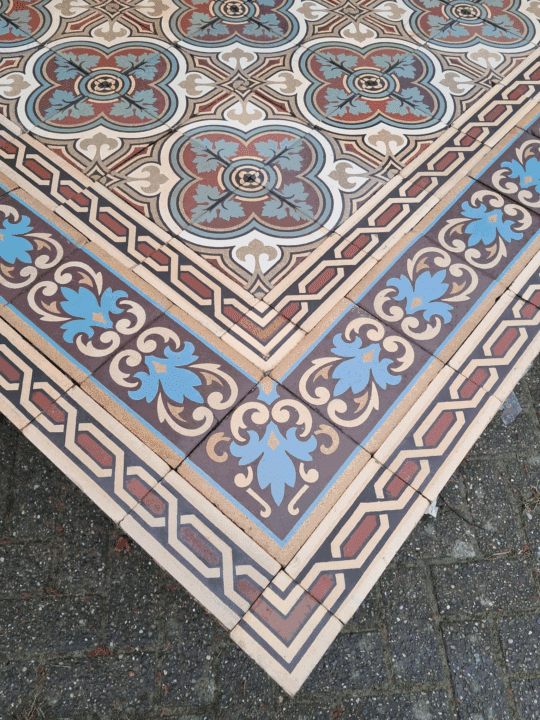
Omschrijving
Antique floor FR21
Antique floor tiles FR21
Old ceramic carrelages FR21
Old Fliesen FR21
Verhoudingen oude tegels 14×14 cm
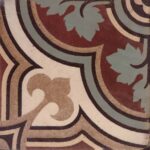
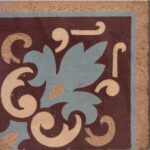
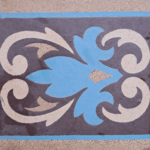
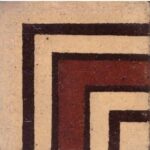
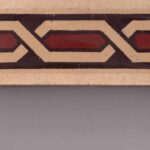
Al onze antieke vloeren zijn unieke stukken en worden daarom altijd in hun geheel verkocht.
De antieke vloeren die op deze website worden getoond, vormen slechts een selectie uit ons volledige aanbod. Bezoek onze showroom voor het meest actuele assortiment.
Het betreft antieke keramische tegels. Deze zijn gebakken en daardoor uitermate geschikt voor toepassing in natte ruimtes, zoals inloopdouches. Ook buitengebruik, bijvoorbeeld op een terras, is mogelijk, aangezien de tegels vorstbestendig zijn en hun kleur behouden.
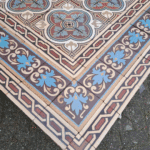
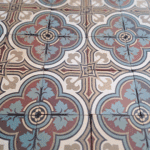
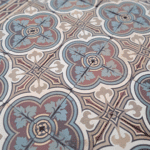
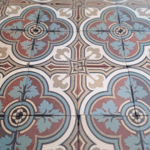
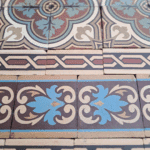
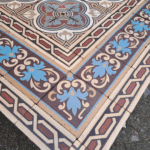
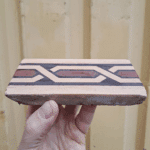
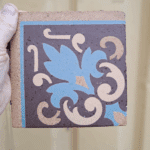
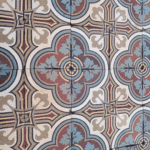
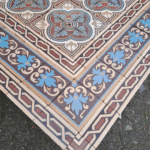
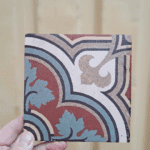
Antieke tegels: tijdloze charme en vakmanschap voor uw interieur
Antieke tegels zijn meer dan 100 jaar oud en vertellen een verhaal van geschiedenis, vakmanschap en tijdloze schoonheid. Ondanks hun leeftijd zijn deze handgemaakte keramische tegels nog steeds van uitstekende kwaliteit. Het vakmanschap waarmee ze destijds zijn gemaakt, zorgt ervoor dat elke tegel duurzaam, stevig en klaar voor gebruik is, zowel binnen als buiten.
Kleine beschadigingen of onregelmatigheden in de tegels moeten juist worden gezien als karakteristieke details. Ze vormen een belangrijk onderdeel van de authentieke uitstraling en voegen sfeer en geschiedenis toe aan elke ruimte. Na het voegen zijn deze kleine imperfecties bovendien nauwelijks zichtbaar, waardoor het eindresultaat een vloeiende en elegante uitstraling heeft.
Door de hoge baktemperatuur van ongeveer 1300 graden zijn antieke tegels bijzonder robuust en geschikt voor intensief gebruik. Dit maakt ze ideaal voor vloeren in woonkamers, keukens, badkamers, hallen, terrassen, serres of tuinhuisjes. Bovendien kunnen deze tegels uitstekend gecombineerd worden met vloerverwarming, omdat keramiek warmte goed geleidt en vasthoudt. Zo creëert u een comfortabele en stijlvolle vloer die functioneel én prachtig is.
Elke tegel is met de hand vervaardigd, waardoor er natuurlijke variaties ontstaan in kleur, formaat en dikte. Deze verschillen zijn geen probleem; ze dragen juist bij aan de unieke charme en levendigheid van het geheel. Geen enkele vloer zal ooit precies hetzelfde zijn, waardoor uw ruimte een exclusieve uitstraling krijgt die u nergens anders vindt.
Kies voor antieke tegels en haal een stukje geschiedenis, vakmanschap en tijdloze elegantie in huis. Of u nu een klassieke, rustieke of moderne inrichting wilt verrijken, handgemaakte antieke tegels zorgen voor een vloer of wand die karakter, warmte en een authentiek verhaal uitstraalt.
Antique Tiles: A Floor Full of History and Character
Step into a room with antique tiles and immediately feel the charm of over 100 years of craftsmanship. Each tile is handmade, unique in color, size, and thickness, carrying a story from the past. Small imperfections or minor chips are not flaws—they are the signature details that give these tiles their authentic character. After grouting, these subtle nuances are barely visible, creating a seamless and elegant floor.
Thanks to being fired at around 1300 degrees, antique tiles are extremely durable and suitable for both indoor and outdoor use. From living rooms and kitchens to bathrooms, conservatories, or patios, these tiles combine strength with timeless beauty. They are also perfect for underfloor heating, conducting and retaining warmth for a comfortable and cozy floor.
The true beauty of handmade antique tiles lies in their uniqueness. Variations in color, thickness, and size bring life, personality, and exclusivity to every floor—something modern tiles cannot replicate. Whether you want to enhance a classic, rustic, or contemporary interior, antique tiles instantly add warmth, charm, and authenticity.
Choosing antique tiles means bringing a piece of history into your home—a floor that combines craftsmanship, durability, and one-of-a-kind beauty. Transform any space into a room full of character and style, where modern comfort meets timeless elegance. Your interior deserves more than just a functional floor—it deserves a statement of history, style, and personality.
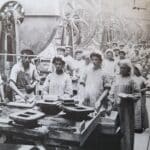
Breng sfeer en geschiedenis in huis met handgemaakte antieke tegels
Handgemaakte antieke tegels zijn veel meer dan alleen vloeren of wanden – ze zijn verhalen, vakmanschap en geschiedenis in één. Elke tegel is uniek: vroeger met de hand gegoten in mallen, kleuren op het oog gemengd, gebakken met kleine variaties in temperatuur en baktijd. Dat geeft iedere tegel zijn eigen karakter en een warme, authentieke uitstraling die moderne tegels nooit kunnen evenaren.
De subtiele verschillen in kleur, formaat en dikte maken elke vloer of wand bijzonder. Bij het fotograferen van een vloer tonen we een willekeurig deel om een getrouwe indruk van het geheel te geven. Voor de installatie adviseren we eerst een proefvlak droog te leggen, zodat de natuurlijke variaties optimaal tot hun recht komen.
Met handgemaakte antieke tegels haalt u een stukje geschiedenis in huis. Ze transformeren elke ruimte in een sfeervolle, tijdloze plek vol charme en karakter, waar moderne luxe en klassiek vakmanschap samenkomen.
Een antieke vloer: karakter en authenticiteit in één
Een antieke vloer voegt direct karakter en authenticiteit toe aan elke ruimte. Waar een nieuwe vloer vaak strak en uniform oogt, straalt een antieke vloer warmte, geschiedenis en vakmanschap uit. Denk bijvoorbeeld aan een antieke tegelvloer met prachtige patronen die generaties lang zijn meegegaan, of antieke bestrating waarvan het natuurlijke gebruik een unieke, geleefde uitstraling geeft. Ook een antieke houten vloer brengt tijdloze elegantie in huis: de nerven, kleurvariaties en kleine imperfecties vertellen samen een verhaal dat geen nieuwe vloer kan evenaren.
Het hergebruiken van een oude vloer biedt niet alleen esthetische voordelen, maar is ook een duurzame keuze. Door originele materialen opnieuw te gebruiken, verlengt u hun levensduur en brengt u vakmanschap uit het verleden terug in het heden. Zo kiest u voor een exclusieve uitstraling én een milieuvriendelijke oplossing.
Of u nu een historisch pand restaureert of een modern interieur verrijkt met contrast en warmte, een antieke vloer biedt altijd de perfecte basis. De combinatie van schoonheid, kwaliteit en erfgoed maakt elke antieke tegelvloer, elke set tegels en elke houten plank tot een waardevolle investering. Hiermee legt u letterlijk de basis voor een interieur vol karakter, stijl en een verhaal dat generaties lang meegaat.
Een antieke vloer is de ideale manier om sfeer en warmte toe te voegen aan uw interieur. Een antieke tegelvloer met elegante patronen creëert direct ambiance, terwijl de verweerde uitstraling van antieke tegels een ruimte een robuust en tijdloos karakter geeft. Door te kiezen voor deze vloeren, maakt u bovendien een duurzame keuze: materialen krijgen een tweede leven. Zo combineert u stijl, vakmanschap en duurzaamheid in één unieke basis voor uw huis.
Kom het zelf ervaren in onze showroom. FLOORZ heeft de grootste collectie in Nederland.
An antique floor is more than just a functional base for your interior; it is a timeless way to bring character, history, and atmosphere into your home. Every surface, from weathered natural stone tiles to robust terracotta planks, tells a story of craftsmanship and generations past. While modern floors often appear sleek and uniform, an antique floor radiates authenticity: subtle imperfections, color variations, and signs of wear make each tile or plank unique. An antique tile floor adds elegance and refinement, while antique terracotta tiles create a strong and characterful charm. Thanks to careful restoration and reuse, an antique floor can enjoy a second life, combining sustainability with style. In historic buildings, an antique floor enhances the original ambiance, while in modern interiors it can form a striking contrast that adds depth and personality. Choosing an antique floor is not only an investment in a beautiful interior, but also in heritage, quality, and timeless design. It makes your home more unique, personal, and visually captivating. An antique floor is therefore a valuable addition that can be admired for generations, giving every space a distinctive and enduring appeal.
An old one is also a simple basis for interior design; it is a matter of time with the character, history and ambiance of the house. Chaque surface, with the roughness of the carreaux and pierre natural patinés of the older robustes, with a history of savoir-faire and the generations passed. Because of the modern equipment of souvent uniforms and garments, their age is unique and authentic: the imperfections, the variations of the color and the traces of the custom are unique. An old carrelage with elegance and refinement, despite the old age, with a solid charm and character. Grateful for restoration and reutilization, a lifetime of living for a second, allied to durability and style. The historical background of the buildings, the ambiance of the origin, the modern interior design, the creation of a contrast between a professional and personal character. Choosing a lifetime is a matter of investment in beauty, quality and contemporary design. Il rent votre maison unique, chaleureuse et visuellement captivante. Since we were young we were very proud of ourselves, with admiration for the generations and with a distinctive charm in a charming space.
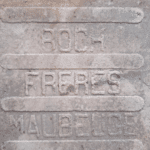
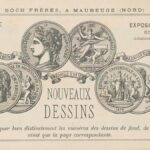
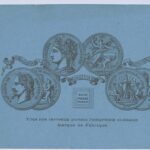
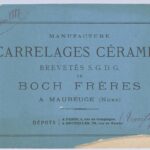
Wat weten we verder over de fabrikant Boch Frères in Maubeuge?
Basis & geschiedenis
Boch Frères is oorspronkelijk een voortzetting van het keramische erfgoed van de familie Villeroy & Boch. Vanaf het midden van de 19e eeuw produceerden zij steengoed en ingelegde vloertegels.
Om de Franse markt beter te bedienen zonder douaneproblemen, werd de productie van ingelegde tegels eind jaren 1850/begin jaren 1860 verplaatst van de fabriek in Luxemburg/België (La Louvière) naar een nieuwe fabriek in Louvroil, bij Maubeuge in Noord-Frankrijk.
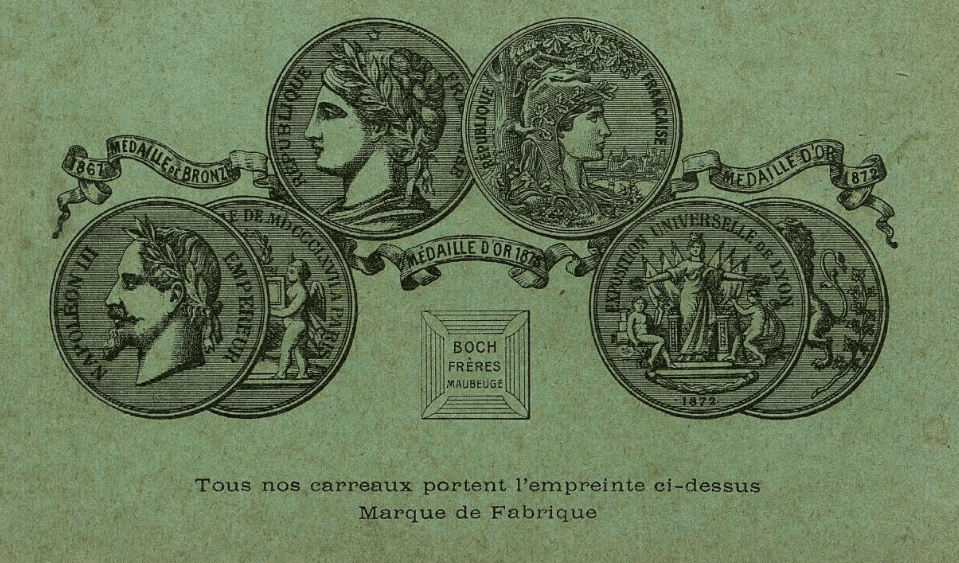
De fabriek in Louvroil/Maubeuge werd in 1861 officieel opgericht. Tegen 1870 had Boch Frères al ongeveer honderd verschillende vloerpatronen in het assortiment.
De productie groeide sterk: rond het begin van de 20e eeuw werkten er honderden mensen en werden meerdere stoommachines en ovens gebruikt. Rond 1936 werd de productie in Maubeuge/Louvroil beëindigd, deels door veranderende smaken en marktomstandigheden.
Producten & technieken
Boch Frères-tegels werden vervaardigd met de “dust-press / dry-press”-techniek: mengsels van droge klei werden sterk geperst tot tegelblokken of tesserae, waardoor ingelegde patronen mogelijk waren.
De vloertegels waren meestal zwaar (± 1,25–1,4 kg per tegel), vrij dik — vaak 16–18 mm — en van hoge dichtheid. Patronen varieerden van geometrisch tot bloemmotieven, soms met “cabochon”-achtige elementen, mozaïekmotieven, bladvormen, enz.
Door het handmatige persen en bakproces (variabele temperaturen, batchproductie) kunnen tegels subtiele variaties vertonen in kleur, toon, textuur en formaat. Dit maakt elke tegel uniek en draagt bij aan de charme en authenticiteit.
Bereik & betekenis
Boch Frères-tegels werden niet alleen in Frankrijk gebruikt, maar geëxporteerd naar tal van landen — hun vloeren bereikten België, het VK, Nederland, Italië en zelfs markten verder weg.
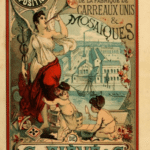
Boch Frères speelde een belangrijke rol in de verspreiding en populariteit van encaustic-tegels in de 19e en vroege 20e eeuw en had grote invloed op de Europese tegelindustrie. Het succes leidde ook tot concurrentie: voormalige directeurs en medewerkers richtten later eigen tegelbedrijven op, wat de keramische productie in Noord-Frankrijk en België sterk diversifieerde.
Wat Boch-tegels herkenbaar en gewaardeerd maakt
-
Sterke, dikke steengoedtegels van robuuste kwaliteit — geschikt voor intensief gebruik, binnen en buiten.
-
Esthetisch verfijnde patronen, vaak klassiek, geometrisch of bloemrijk — perfect in historische gebouwen of restauraties.
-
Authentieke charme: door handmatige productie heeft elke tegel kleine variaties, wat de vloer karakter en “levendigheid” geeft.
-
Historische waarde: een directe link naar de industriële keramiekgeschiedenis van Noord-Frankrijk en België en het brede gebruik van encaustic- en ingelegde vloeren in Europa.
Extra specificaties:
-
Categorie: Antieke vloertegels
-
Dikte: gemiddeld 16 mm
-
Geschikt voor: Vloer- en wandtegels
-
Productie: Gebakken tegels
-
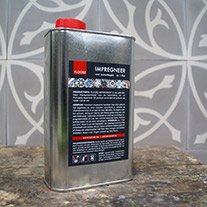
Impregnatie: Nee, impregneren is niet nodig
-
Vloerverwarming: Ja, geschikt voor vloerverwarming
-
Antislipwaarde: R10
-
Oppervlak: Geglazuurd
-
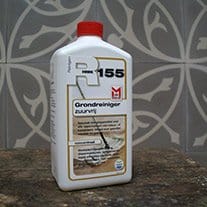
Reiniging: Alle reinigingsmiddelen mogelijk
-
Kleurverschillen: Ja, kunnen aanwezig zijn
-
Effen tegels beschikbaar: Ja
-
Bijpassende wandtegels beschikbaar: Zelliges tegels
-
Randtegels beschikbaar: Ja, meestal
-
Land van herkomst: Patronen afkomstig uit Frankrijk
-
Materiaal: Gebakken klei en ijzeroxide kleurpigmenten
-
Gewicht: 37 kg per m²
-
Handgemaakt: Ja, elk stuk is handgemaakt
-
Alternatief goedkopere vloertegels: Portugese vloertegels
 Facebook